
How Often to Clean Your Washing Machine (by Brand)
How often should you clean your washing machine? About once a month, whether it is a front-loader or a top-loader. Samsung says to run its Self Clean cycle about once a month or every 30 to 40 loads (Samsung). LG (LG), Whirlpool (Whirlpool) and GE Appliances (GE Appliances) all say once a month. Beko allows every 1 to 3 months (Beko), and Bosch suggests its machine cleaner every three months (Bosch). Clean it sooner if it smells, leaves residue on clothes or shows a cleaning reminder.
That means running the machine’s own drum clean cycle, empty, with the product its maker names. Below are each brand’s figures, how to run the cycle and what the drum clean misses. None of it needs tools. For other washer problems, see all our washing machine fixes.
Before you start: Use one cleaning product per clean and read its label. Never mix bleach with vinegar, ammonia or any other cleaner: together they give off toxic gas. Wear rubber gloves when you handle bleach, and open a window. Unplug the washer before you open the pump filter, and let the water cool first if the last wash was hot. Keep cleaning tablets and bleach out of reach of children and pets.
How often each brand says to clean the drum
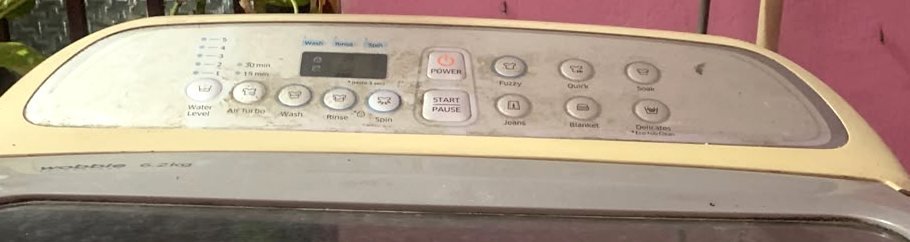
These are the manufacturers’ own figures. Cycle names and products differ, so check your manual for your exact model. My own Samsung top-loader shows how much they vary: its drum clean cycle is called Eco Tub Clean, and it shares a button with Delicates.
| Brand | Machine | Cycle | How often | What to put in |
|---|---|---|---|---|
| Samsung | Front- and top-loaders | Self Clean, Self Clean+ or Pure Cycle | About once a month, or every 30 to 40 loads | Usually nothing. Bleach only for a mildew smell or visible mould |
| Samsung (UK) | Front-loaders | Eco Drum Clean or Eco Drum Clean+, 60 to 70°C (140 to 158°F) | When the reminder shows, every 40 washes | No ordinary cleaning agent or laundry detergent |
| LG | Front- and top-loaders | Tub Clean | Once a month. Some top-loaders blink “tcL” when it is due | A washing machine tub cleaner, as its pack directs |
| Whirlpool | Front- and top-loaders | Clean Washer | Once a month. Some models light a “clean washer” reminder | One affresh tablet in the drum. Top-loaders: affresh or liquid chlorine bleach |
| GE Appliances | Top-loaders | Basket Clean | Once a month | 250 ml (1 cup) of liquid bleach, vinegar or washer cleaner: one of them, never a mix |
| Beko | Front-loaders | DrumClean+, 70°C (158°F) | Every 1 to 3 months | Ideally a washing machine cleaning agent |
| Electrolux | Front-loaders | Empty Cotton wash at 90°C (194°F), or 95°C (203°F) on some models | Once a month. Some models show “CLE” every 60 washes | A cleaning agent, or a small amount of detergent |
| Bosch | Front-loaders | Bosch’s own washing machine cleaner | Every three months | That cleaner. Bosch advises against vinegar |
From Samsung US, Samsung top-load, Samsung Canada, Samsung UK, LG, LG top-load, Whirlpool, Whirlpool top-load, GE Appliances, Beko, Electrolux, Electrolux CLE and Bosch.
Top-loaders need the same monthly clean as front-loaders. Samsung says a top-loader’s clean typically takes around one hour, against up to four hours on a front-loader (Samsung). Whirlpool’s front-load advice adds “every 30 wash cycles” as an alternative to monthly (Whirlpool), a better guide if you wash every day.
What you need
- The cleaner your manual names, if any.
- Rubber gloves, if you use bleach.
- Kitchen roll (paper towels) or a soft cloth.
- Old towels and a shallow tray for a front-loader’s pump filter.
How to run a drum clean cycle
- Find the cycle: the table above gives each brand’s name for it. Your manual lists it.
- Empty the drum: take out all clothes and anything left inside.
- Add one product, in the right place: Whirlpool says to put one affresh tablet in the drum (Whirlpool). LG puts tablets in the drum and powder or liquid cleaner in the main wash compartment (LG). GE Appliances says to pour the bleach, vinegar or cleaner into the basket (GE Appliances). For Samsung’s routine Self Clean, add nothing.
- Start it and let it finish: close the door or lid and start the cycle. Whirlpool says not to stop it or open the door or lid while it runs (Whirlpool).
- Wipe and air it: Samsung suggests wiping any residue from the drum with kitchen roll, then running a Rinse+Spin cycle to clear what’s left (Samsung). Then leave the door and the detergent drawer open so the inside dries (LG).
No clean cycle on your machine?
Whirlpool says to use the cycle with the highest water level and the hottest water temperature, with the drum empty (Whirlpool). Beko says to run an empty cycle at the hottest temperature, without detergent (Beko).
For LG top-loaders without Tub Clean, LG says to add the cleaner, fill the tub at least two-thirds with water, run for 2 to 3 minutes, then soak for 2 to 4 hours before running Wash, Rinse and Spin (LG).
What to put in, and what to avoid
Brands disagree here, so follow your own manual rather than another brand’s recipe.
- Nothing extra: Samsung says no additional cleaner is usually required for Self Clean (Samsung Canada). On its UK Eco Drum Clean cycles, Samsung says not to use a common cleaning agent or ordinary laundry detergent, because residue can damage the laundry or the drum (Samsung UK).
- Bleach: Whirlpool and GE Appliances list it for top-loaders. Samsung advises it only for a mildew smell or visible mould. It goes in the detergent compartment up to the MAX line, not the bleach compartment (Samsung), and never straight into the drum (Samsung Canada). LG says undiluted bleach is not recommended for cleaning the tub (LG). Whirlpool notes that some front-loaders are not compatible with bleach (Whirlpool).
- Vinegar: GE Appliances lists it as an option for Basket Clean. Bosch says not to use it: it calls vinegar “too aggressive” and says it can damage rubber parts (Bosch). Whitegoods Help warns that regular use can degrade rubber door seals and hoses over time (Whitegoods Help).
Never mix bleach with anything else: bleach reacts with any cleaning product that contains ammonia or an acid, including vinegar, and can release toxic gases (Health Canada). Use one product per clean. Don’t add bleach to a cycle that already has a cleaner tablet in it, and don’t pour vinegar in to “boost” a bleach clean.
The rest of the routine, and how often
A drum clean doesn’t reach these parts, so they need their own schedule.
- Door seal (front-loaders): give it a deep clean once a month. Beko says monthly (Beko), and Whirlpool says monthly or every 30 cycles (Whirlpool).
- Detergent drawer: Beko says after every four to five uses (Beko). Samsung Canada says about once a month (Samsung Canada), and Whirlpool every 30 cycles (Whirlpool).
- Pump filter (front-loaders): LG says to clean it when you do the monthly tub clean (LG). Samsung UK says 5 or 6 times a year, and whenever the drum clean reminder shows (Samsung UK). Beko says every three months, or whenever it clogs (Beko). Our guide to a washing machine that won’t drain shows how to drain and open it.
- Lint filter (some top-loaders): not every top-loader has one (Samsung), so check your manual.
- After every wash: leave the door or lid open between washes so the inside dries (Whirlpool).
Signs you should clean it sooner
- A musty smell: Samsung says to run Self Clean more often if odours or visible residue persist (Samsung). If a musty smell is already there, LG says to run Tub Clean once a week for 3 weeks in a row (LG).
- Grey marks or residue on clothes: Electrolux says grey marks are usually caused by detergent residue, a dirty machine, overloading or the wrong use of detergent (Electrolux).
- A reminder on the display: Samsung’s UK Eco Drum Clean+ reminder blinks every 40 washes (Samsung UK). Electrolux shows “CLE” every 60 washes (Electrolux). Some LG top-loaders blink “tcL” (LG), and some Whirlpool models light a clean washer indicator (Whirlpool).
- Cool washes most of the time: Electrolux links frequent washes at 40°C (104°F) or below, with enzyme detergents, to mould and greasy build-up (Electrolux). Bosch advises washing regularly at 60°C (140°F) or higher (Bosch). If you mostly wash cold, Whirlpool suggests a hot cycle from time to time (Whirlpool).
- Heavy detergent or softener use: Samsung says too much detergent leaves soap scum that eventually smells, and softener builds up too (Samsung).
When to call a technician
Stop and call a technician if: a musty smell or black mould comes back straight after a clean, or stays after several cleans; mould stays on the door seal after cleaning, because the seal then needs replacing by a professional; an error code appears during the clean cycle and comes back after a restart; water leaks from under the machine; you smell burning (beyond a new washer’s first couple of cycles); or the drum grinds, rumbles or bangs when it is empty. Don’t open the back panel or base, and don’t tip the machine over.
The smell, mould and burning advice comes from LG (LG), Samsung (Samsung) and Electrolux (Electrolux). When you book, have the brand, model number and any error code ready, and say which cleaner you used and how often you run the clean.
Common questions
Can I run a drum clean with clothes in?
No. Samsung says running Self Clean with laundry in can damage the washer and the clothes. Whirlpool and GE Appliances both say to empty the drum first.
Is vinegar safe for my washing machine?
It depends on the brand. GE Appliances lists it for Basket Clean, but Bosch says not to use it, and Whitegoods Help warns that regular use can degrade seals and hoses. Check your manual. Never use vinegar and bleach together, or one straight after the other in the same clean.
How often should I clean a top-loader?
Once a month, the same as a front-loader. Samsung, LG, Whirlpool and GE Appliances all give monthly intervals for their top-loaders. If it has gone 6 months or more, LG suggests running the clean three times in a row.
Sources
- Washer smells bad or has mold (Samsung US)
- How to use Self Clean on a Samsung top load washer (Samsung)
- How to clean your Samsung washer (Samsung Canada)
- Check the cleaning functions and sections on the washing machine (Samsung UK)
- Cleaning the lint filter of a Samsung top load washing machine (Samsung)
- Tub cleaning: front and top load washer (LG)
- LG top load washing machine: how to clean the tub (LG)
- LG front load washer maintenance (LG)
- LG washer troubleshooting: odour build-up (LG)
- Cleaning washers with affresh (Whirlpool)
- Cleaning the interior: top load washer (Whirlpool)
- Smells in a front load washer (Whirlpool)
- How to clean the gasket on a front load washer (Whirlpool Canada)
- How to clean a washing machine (Whirlpool Canada)
- Top load washer: cleaning the tub (GE Appliances)
- How to clean a washing machine (Beko UK)
- How to clean your washing machine door seals (Beko UK)
- Washing machine cleaner (Bosch UK)
- Washing machine smells like rotten eggs (Bosch)
- Washing machine smells of vinegar (Bosch Ireland)
- Grey marks on laundry after washing (Electrolux UK)
- Cleaning the washing machine’s rubber seal if it’s dirty (Electrolux UK)
- Washing machine displays CLE drum cleaning reminder (Electrolux UK)
- Washing machine smells (Whitegoods Help)
- Reduce your risk of toxic gases: never mix bleach with other cleaning products (Health Canada)
Stuck on a step?
Ask below with your appliance's brand and model number, and we'll help if it's safe to fix at home.